Marija Gimbutas (Marija Alseikaitė-Gimbutienė, 1921–1994)
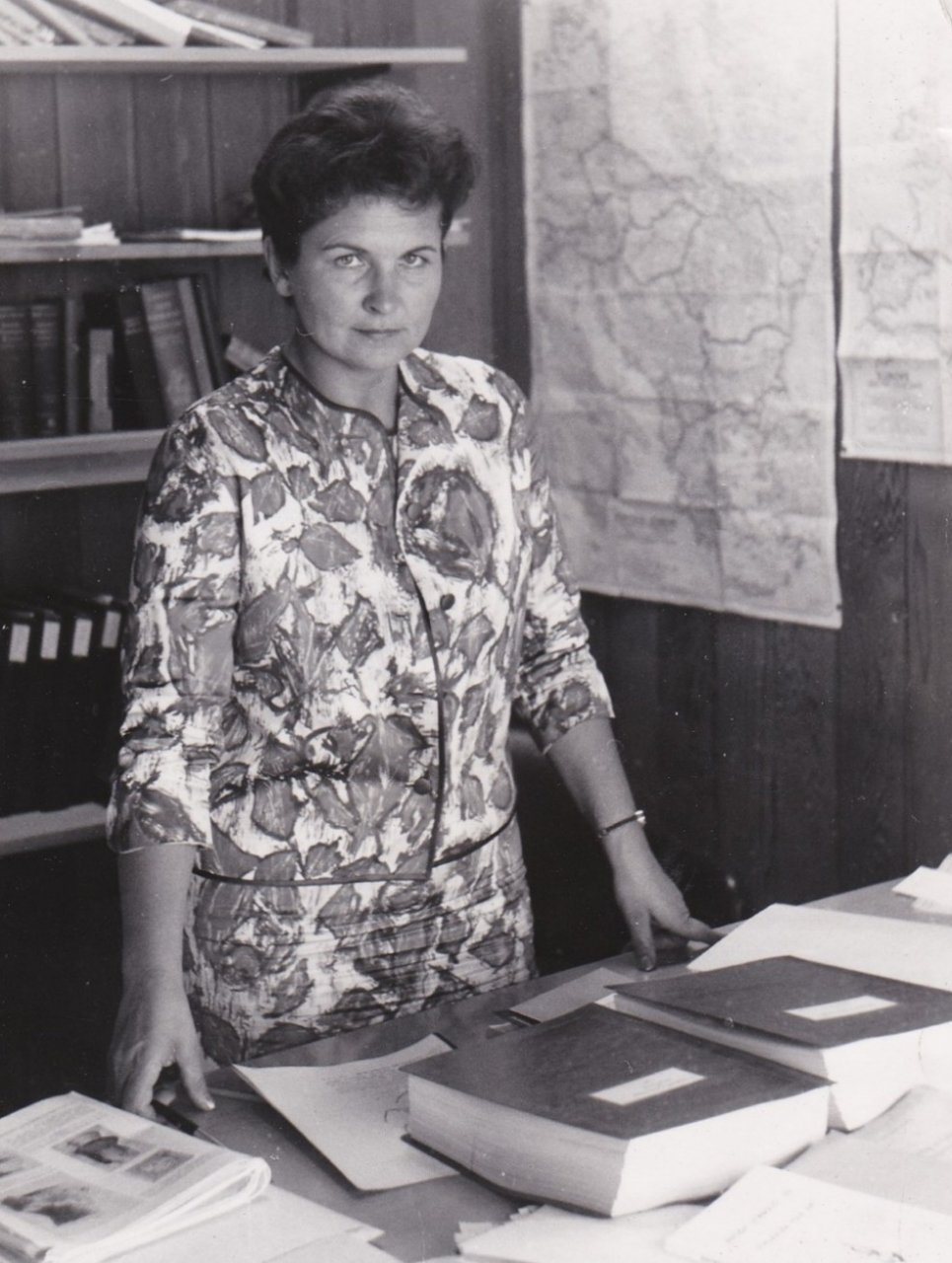
Marija Gimbutas was a Lithuanian archaeologist who became a legendary figure in European and world archaeology. To Lithuanians and to many feminists, she emerged as a kind of folk heroine. Her pioneering work spanned multiple fields, from prehistory and linguistics to mythology and comparative religion. Gimbutas developed two groundbreaking theories that reshaped 20th-century archaeological thought: the Kurgan hypothesis and the concept of Old Europe, a goddess- and woman-centred civilization.
Born in Vilnius to a family of physicians, Gimbutas had an idyllic childhood. She began her studies of archaeology, ethnology, folklore, and linguistics at the University of Kaunas in 1938, later earning her M.A. at the University of Vilnius in 1942. In 1946, she defended her doctoral dissertation, Prehistoric Burial Rites in Lithuania, at the University of Tübingen in Germany.
As the Red Army reoccupied Lithuania in 1944, Gimbutas and her family fled westward to Austria and Germany, and in 1949 emigrated to the United States. There she began her academic career at Harvard University, working on translations of Eastern European archaeological texts before becoming a lecturer in the Department of Anthropology.
In 1956, at an international conference in Philadelphia, Gimbutas introduced her Kurgan hypothesis, which combined archaeological research on distinctive burial mounds with linguistics to explain the origins and migrations of Proto-Indo-European peoples. She argued that Indo-European language, social structure, and culture entered Europe in several waves from the Eurasian steppes—particularly from the Volga, Ural, and Dnieper regions. Her interdisciplinary approach, bridging archaeology and linguistics, had a profound influence on Indo-European studies and contributed to understanding the origins of the Balts and the process of Indo-Europeanisation across Europe.
After publishing The Prehistory of Eastern Europe (1956), Gimbutas gained international recognition as a specialist on the Indo-European Bronze Age. Her subsequent books—The Balts (1963), Bronze Age Cultures in Central and Eastern Europe (1965), and The Slavs (1971)—further established her scholarly reputation. The Balts, translated into several languages, became a milestone in Baltic studies and introduced Lithuanian prehistory to Western academia.
In 1964, Gimbutas became Professor of European Archaeology and Indo-European Studies at the University of California, Los Angeles (UCLA), and in 1965, Curator of Old World Archaeology at the same institution. Between 1967 and 1980 she directed five major excavations of Neolithic sites across former Yugoslavia, Macedonia, Greece, and Italy, unearthing a wealth of anthropomorphic figurines and ritual artifacts.
Through her analysis of this material, Gimbutas developed the concept of Old Europe, a peaceful, woman-centred (gynocentric or matristic) civilization that flourished before the Indo-European migrations. She interpreted its symbols and images—often female figures associated with birds and snakes—as evidence of a Goddess of birth, death, and regeneration. Her studies culminated in three influential books: The Goddesses and Gods of Old Europe (1974), The Language of the Goddess (1989), and The Civilization of the Goddess (1991). These works offered a comprehensive reconstruction of Neolithic European art, religion, and social structure, contrasting Old Europe’s egalitarian worldview with the patriarchal Indo-European Bronze Age systems.
Gimbutas called her interdisciplinary method archaeo-mythology, combining archaeology with mythology, linguistics, ethnology, folklore, and comparative religion to explore the symbolic and spiritual dimensions of ancient cultures. Her research inspired feminist spirituality, religious scholarship, and psychology, influencing a broader cultural movement celebrating the divine feminine and ecological harmony.
While her goddess theories were widely popular and even inspired artists and filmmakers—including Jane Fonda, who once planned to portray her in a film—they also provoked strong academic criticism. Gimbutas herself distanced her science from activism, saying: “I am a scientist, not a feminist. If you start being part of some kind of movement, you lose your freedom, and freedom for the scientist is the most important thing.”
Despite spending most of her life in the United States, Gimbutas remained deeply connected to Lithuania, maintaining scholarly ties, publishing research on Baltic archaeology, and visiting Vilnius University, her alma mater, even during the Soviet period. Toward the end of her life, she expressed the wish to have her funeral in St. John’s Church in Vilnius and to be buried in Kaunas, at Petrašiūnai Cemetery beside her grandparents—a wish fulfilled upon her death in May 1994.
Marija Gimbutas’ bibliography includes 33 books (published in nine languages) and over 300 scholarly articles. Her theories on the Kurgan culture and Old Europe transformed the understanding of European prehistory and placed Lithuanian archaeology within a global context. Her vision of a peaceful, symbolic, and humanistic Old Europe emphasized the value of cultural diversity and dialogue between civilizations. Even today, her work continues to influence archaeology, mythology, and feminist thought worldwide.